Recovery Mode Dashboard
Recovery Mode is a two-part system built for modern recovery operations.
The Recovery Mode App supports the client outside the clinic. The Recovery Mode Dashboard equips organizations with trend visibility, early risk signals, and intervention documentation workflows.
Relapse is rarely sudden. In most cases, it is preceded by patterns: environmental exposure, disengagement, destabilization, and drift back into high-risk areas. Recovery Mode is designed to help organizations detect those patterns earlier and intervene sooner.
The platform is prevention-focused, dignity-centered, and built for operational scale.
Built for Organizations Managing High-Risk Recovery Clients at Scale
The Recovery Mode Dashboard is built for organizations managing high-risk recovery clients at scale.
The Dashboard provides real-time visibility into relapse-risk patterns, engagement stability signals, and trend intelligence that helps teams intervene earlier.
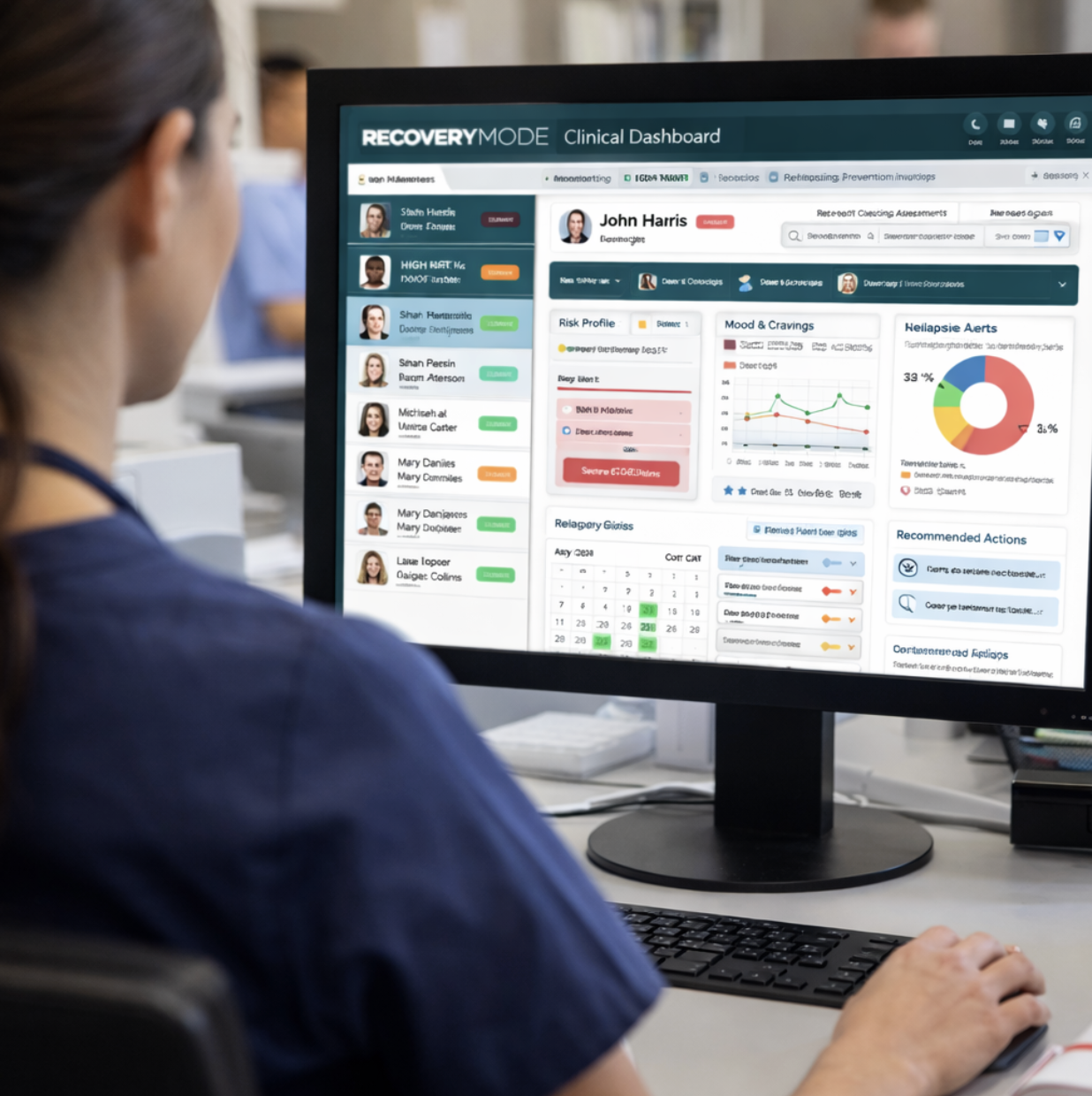
Operational Intelligence for Recovery Teams
Recovery Mode allows organizations to monitor risk-zone exposure trends, identify disengagement patterns, and document interventions through structured workflows designed for accountability and credibility.
Risk-Zone Exposure Trends
Monitor exposure patterns over time, identify repeated high-risk environment visits, and detect trends that correlate with destabilization.
Disengagement Pattern Detection
Identify early signals of engagement decline, missed check-ins, and communication patterns that precede crisis events.
Intervention Documentation
Structured workflows designed for accountability and credibility, enabling teams to document care actions, outreach attempts, and stabilization outcomes.
Measurable Outcomes
Demonstrate measurable care actions, outreach attempts, stabilization outcomes, and engagement trends over time.
Measurable Care Actions and Outcomes
Instead of relying solely on after-the-fact reporting, organizations can demonstrate measurable care actions, outreach attempts, stabilization outcomes, and engagement trends over time.
Strengthens Retention
Early intervention capabilities help organizations maintain client engagement and prevent disengagement-driven attrition.
Improves Program Credibility
Structured documentation and measurable outcomes strengthen payer confidence, referral relationships, and organizational credibility.
Reduces Staff Burden
Automated visibility and structured workflows reduce manual tracking burden and enable teams to focus on intervention rather than documentation.
The Visibility Teams Have Historically Lacked
Recovery Mode strengthens retention, improves program credibility, and reduces staff burden by giving teams the visibility they have historically lacked.
Engineered for Real Recovery Environments
Recovery Mode is engineered for real recovery environments where risk changes quickly and intervention windows are small.
The platform supports Safe Zones, Moderate Zones, and High-Risk Zones, allowing organizations to map relapse-risk environments and identify exposure patterns that correlate with destabilization.
Recovery Mode includes real-time alert and escalation capabilities designed to support structured intervention workflows when risk exposure increases.
The platform includes a shake-to-alert emergency safety feature for clients, enabling immediate escalation and location-sharing with authorized contacts during moments of crisis.
The Dashboard provides trend visibility and engagement signals designed to help teams intervene earlier, document properly, and support measurable outcomes.
Recovery Mode is being developed with clinical workflow integration and billing-support capabilities to strengthen adoption and long-term operational value.
Security & Privacy
Recovery Mode is designed around privacy, consent, controlled access, and responsible handling of sensitive recovery data.
The platform is prevention-focused and support-driven. It is not built for punishment, policing, or shame-based compliance.
Organizations configure platform usage based on their clinical standards, operational policies, and public-sector requirements. Recovery Mode is structured to preserve client dignity while providing teams with the visibility required to support early intervention.